August 2026
ECG Review
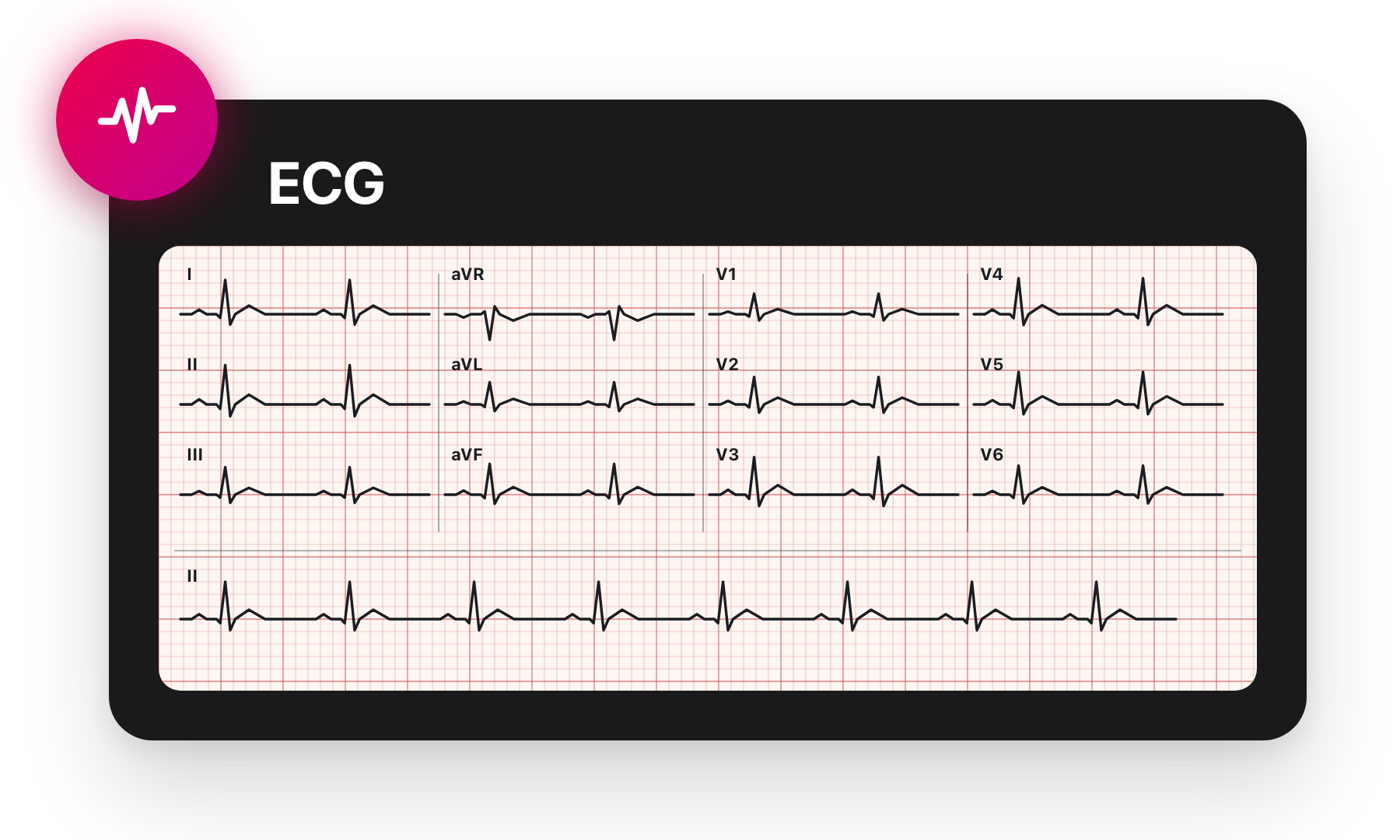
ECGs can now be stored and reviewed directly in HeartLab using native 12-lead and full-disclosure viewers, removing the need to leave the study to view a patient's tracings.
12-Lead ECG Viewer
12-lead ECGs open in a dedicated viewer that draws the tracing on standard ECG paper with controls for paper speed, gain, and the preferred rhythm strip. Recordings containing multiple 12-lead ECGs offer a selector, allowing the 12-lead ECG for each stage of a stress test to be reviewed separately.
Full-Disclosure Viewer
Longer ECG recordings open in a dedicated full-disclosure viewer for continuous review across the whole recording. As in the 12-lead viewer, recordings containing groups of separate ECGs allow each to be selected, and multi-day ECG data is efficiently stored and streamed to your browser as you review.
ECG Formats
The ECG formats HeartLab supports are GE MUSE XML, GE CardioSoft XML, EDF, ISHNE (.ecg), and DICOM ECG. ECG data can be automatically uploaded via the HeartLab Agent in the case of cardiac stress tests, sent directly from modalities using a DICOM send, or manually attached to a study for immediate review.
Configurable Email Notifications
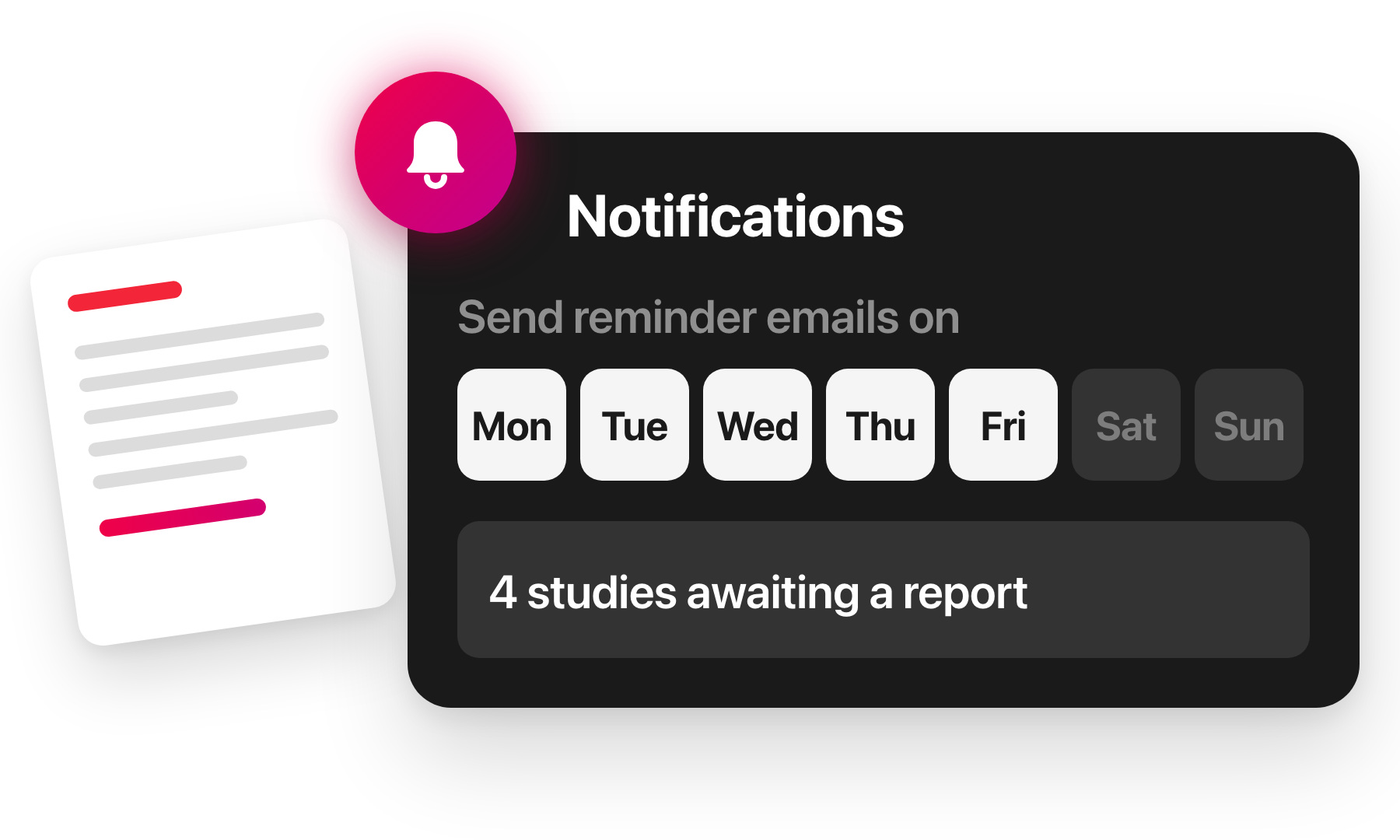
Reminder emails for studies awaiting a finalised report can now be controlled in more detail. In Settings → My Account → Notifications you can select which days of the week reminder emails are sent, so that reminders only arrive on working days rather than every day.
The daily reminder emails are sent in the early hours of the morning, now contain more information about the outstanding studies, and include a direct link to immediately see your unreported studies.
3D CT Reconstructions
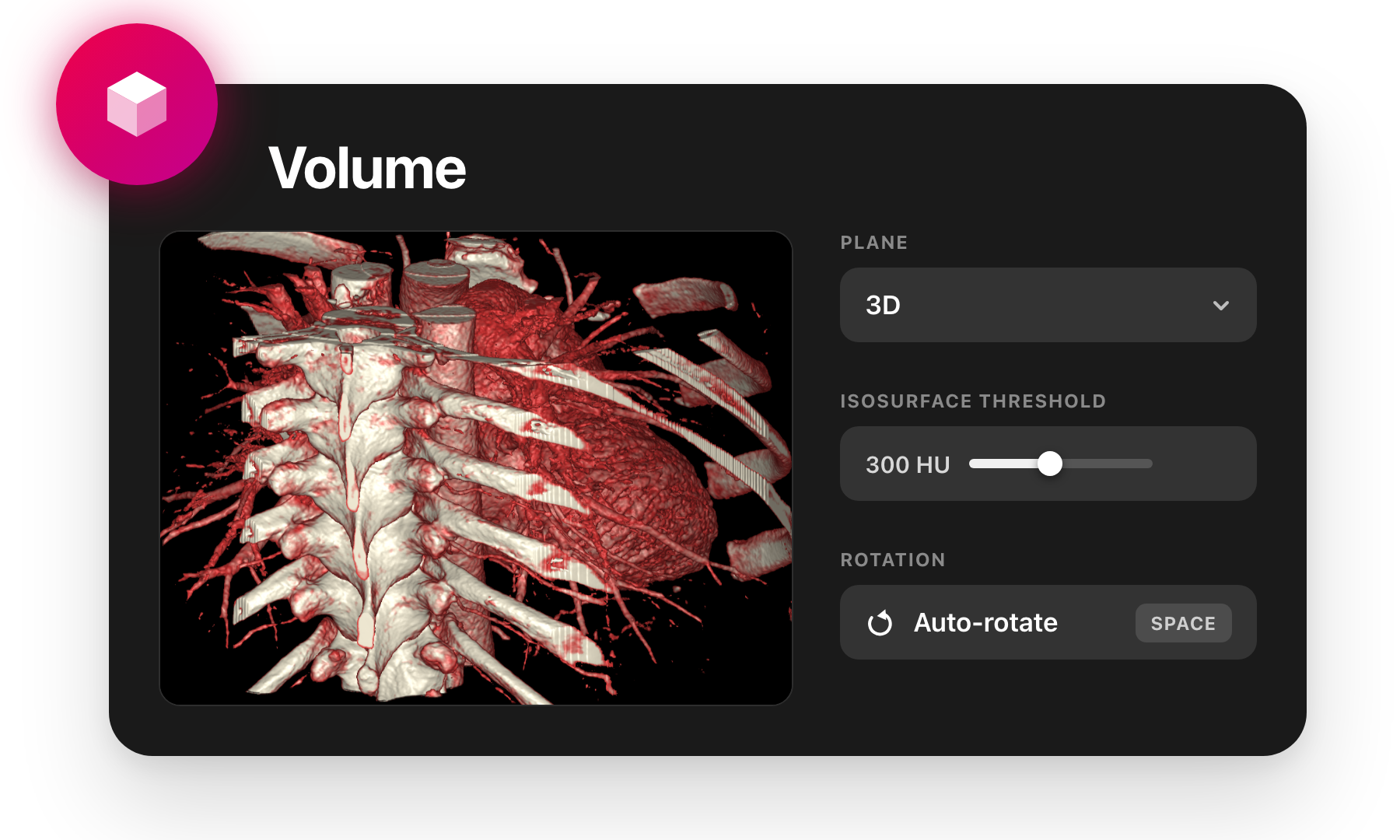
CT volumes can now be viewed as a 3D reconstruction in addition to the existing axial, coronal, and sagittal planes. Selecting 3D from the CT mode dropdown renders a 3D view that can be freely rotated, zoomed, and panned. A threshold slider controls which tissue densities are included in the reconstruction, allowing anatomy to be isolated from surrounding structures.
Report Distributions
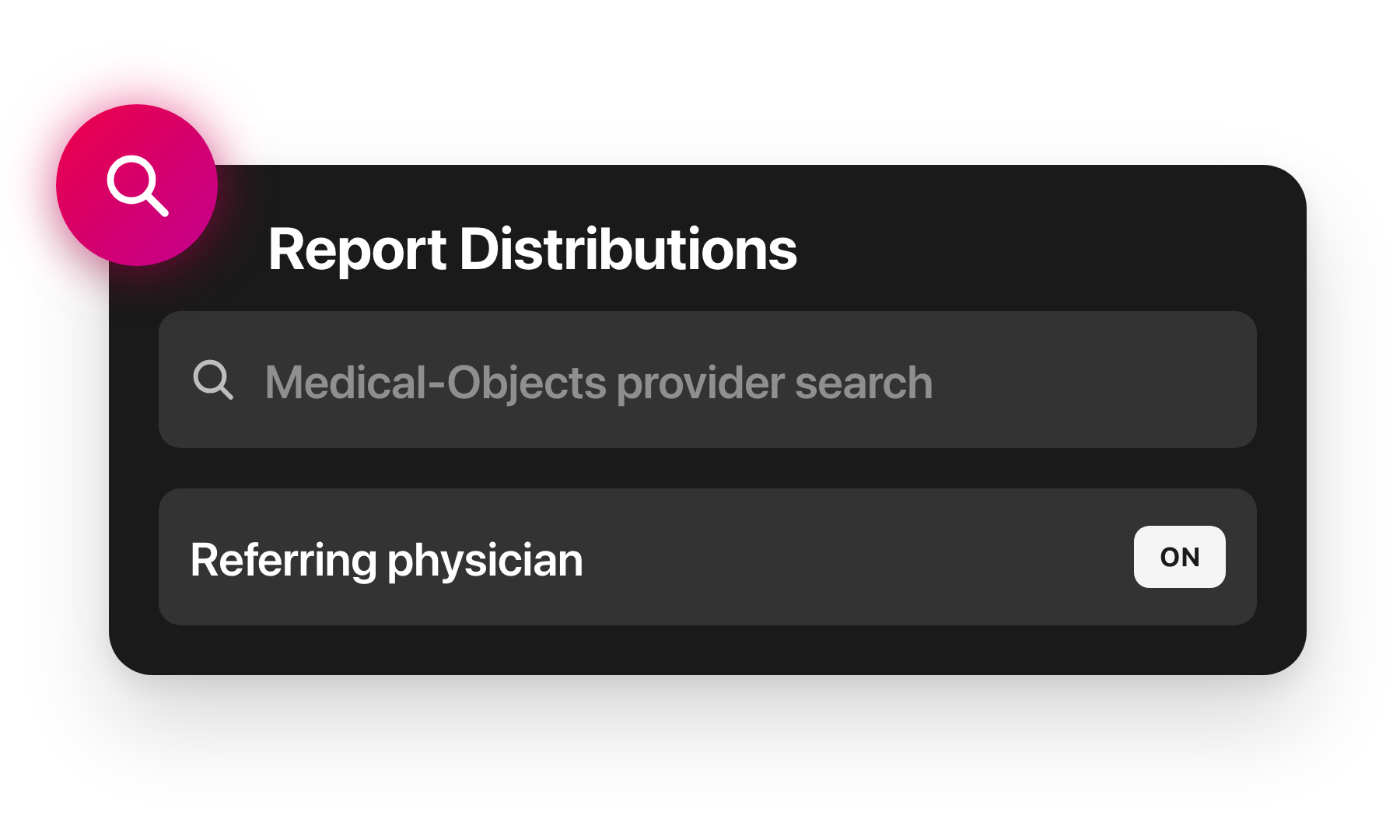
Report distributions can now be created directly in a study to distribute just that study's report where it's needed, and automated report distributions can now trigger based on the study's referring physician.
Per-Study Report Distributions
The report for a study can now be distributed to a custom recipient, either via email or the Medical-Objects Australia distribution network. For Medical-Objects Australia distribution, you can search the provider directory directly in HeartLab to find the desired recipient, making it simple to distribute reports to any clinician.
Medical-Objects Australia report distributions are only available to providers based in Australia.
Automatic Distribution by Referring Physician
Automatic report distributions can now trigger based on the study's referring physician, allowing automatic distribution of the study's report back to the referrer. This closes the loop on report distributions back to the referring physician and frees up time previously spent making sure reports go where they're needed.
Additional Updates
Study Management and Administration
- Update Study Type After Finalisation. A study's type can now be changed from the Study List after its report has been finalised.
- Fetal Ultrasound Study Type. A new "US - Fetal" study type is available, with automatic detection on upload.
- Study Report View Permission. A dedicated "Study Report - View" permission gives finer control over which users can view reports, separate from granting permission to view studies.
Measurements
- Venous Measurements. Thirty new venous measurements are available, with mappings for Mindray devices.
- Mindray Echo Measurements. Further echo measurements are now mapped for Mindray DICOM SRs.
- Improved GE Auto EF Mappings. DICOM structured reports that include values for LVEDV, LVESV, and LVEF generated by GE's Auto EF are now mapped to more specific measurement names.
Reporting
- Duplicate Report Presets. Report presets can now be duplicated in the template editor, making it faster to build variations of an existing preset.
- Text Version of Reports in HL7. HL7 messages can now include a text version of the report for systems that don't support PDF documents.
DICOM
- DICOM Device Connection. Connecting a DICOM device or modality has been simplified, with all essential configuration and connection details available in one place.
- DICOM Device Audit Logs. Audit logs can now be viewed for an individual DICOM device or modality, making it easier to troubleshoot a specific connection.
- HeartLab Agent DICOM Forwarding. The HeartLab Agent can now securely forward DICOM traffic to HeartLab. This allows connectivity from modalities that lack DICOM TLS support at locations where a VPN is not possible.
Need Help?
If you require any assistance with setup or using these new features, please contact HeartLab Support.
September 2026
This release adds 12-lead ECGs on reports, sentence library autocomplete, enhances CT and MR image viewing, and offers HealthLink report distributions in Australia, alongside a range of other improvements.
July 2026
This release introduces richer reporting capabilities, study merging, enhanced integrations for cardiac stress and ABPM, and greater control over report distribution, alongside a range of other improvements.
 MFR
MFR